Longings…

I see a lot of trends online lately where people document themselves going back home after being overseas for a few years, surprising the families and the people they had left behind. I see a lot of these videos coming out of Pakistan, sometimes India too, and watching them really makes me reflect.

The truth is, I have nobody left to surprise anymore.

Maybe twenty eight years ago when I first came here from Pakistan, that would have been possible. But today, I have nobody left to go back to who misses me the way those parents miss their children, or the way those brothers, sisters, and old friends miss each other in those clips. My father passed away. I wish I could see him just one more time, but I know deep down that’s not possible anymore. My sister and I talk frequently, but she is busy with her life, her children, and her husband. And it’s the exact same on my end; I am busy with my own life and my family.

You reach a certain point in life where you realize the relationships you have now are not the ones you had at one point. The friends you have today are not the friends you had back then. The city you visit is no longer the city you left behind. Everything has changed; everything has moved on.

When you reach this middle age; your mid-40s or early 50s, you start looking around for things that are simply not there anymore. Things that are long gone. You wish they were still there; you wish with all your heart that you could go back to them, but that’s just not how it works.

Life moves on. People move on. Everybody moves on. Maybe I moved on too, but there is still a part of me that longs for what used to be, what was once ours, and it’s hard accepting that it is just not there anymore.

Racing …. sort of

After being in America for a few months, we finally managed to get our first car: a 1989 grayish Honda Accord with those iconic flip-up headlights. Man, I loved that car.

It actually had cruise control, which felt like technology from the future. I had my license by then, but my brother didn’t yet, so I was the designated driver. The only problem was we had absolutely no idea how to actually activate the cruise control. We would drive around for hours trying to make it work through pure guesswork. Remember, this was 1998—there was no mobile internet, no Google, and no YouTube to quickly show us how to turn it on. After a ridiculous amount of trial and error, we finally cracked the code and figured it out.

Coming from Pakistan, where cars with fancy features like power windows were still a rare luxury in the late ’90s, this Honda felt incredible. We had bought it for $2,300 from an auction. It had its quirks, of course, namely, it drank engine oil like it was refreshing Gatorade, but it was mine, and I drove it everywhere.

Then came the day I almost lost it all.

I was living in Bladensburg in Prince George’s County (PG County), an area where you really don’t want to mess around with the law. One afternoon, I was driving down Annapolis Road, coming from somewhere near the Baltimore Washington Parkway. I stopped at a red light, and a car pulled up right next to me.

At this point, I was still a total “FOB” (Fresh Off the Boat) and full of teenage adrenaline. I looked over and thought, This guy wants to race.

I gripped the steering wheel and revved the engine. The second the light turned green, we both stepped on the gas. Tires screeching (not sure), we were absolutely flying down Annapolis Road, locked in a serious, high-speed street race. After about a quarter of a mile, I started pulling a little bit ahead. Feeling proud of my $2,300 Honda, I glanced over to my left to give the guy a look.

My heart instantly dropped into my stomach.

The white car next to me turned on its police lights, it was an unmarked police car.

Right at that exact second, the officer flipped on his hidden lights. I thought I was completely done for. A reckless driving charge just a couple of months into living in the U.S. would have ruined my license, if not worse. But instead of pulling me over, the officer just looked right at me, shook his head, and threw his hand up in the air as if to say, “What the hell are you doing?”

He didn’t brake to pull behind me. Instead, he just accelerated past me and took off into the distance. I assumed that an actual emergency call had come in at that exact moment, saving my skin.

I sat there trembling, thinking, “Oh my God, I can’t believe this just happened.” God bless whatever emergency called that police officer away, because he was about to take my car and my freedom.

Needless to say, I drove the rest of the way home strictly under the speed limit, staring at my dashboard, praying my Accord wouldn’t run out of oil before I made it to my driveway.

Welcome to America

I arrived in the USA in 1998. I was just a 19-year-old kid eager to see America and explore the “New World.”

I touched down on a Friday. By Sunday, I already had a meeting lined up with a Bangladeshi who ran a Subway restaurant in Washington, D.C. He hired me on the spot, and I was scheduled to start my very first shift on Monday morning.

Come Monday morning, I arrived at the location around 7:30 AM. The store didn’t even open until 8:00, so I was pretty early. It was a freezing winter morning. Coming from Islamabad, I had absolutely no real understanding of cold. Back home, winter just meant wearing a cool leather jacket to look stylish while braving the chilly air. But the cold in D.C. was a completely different beast; it bit right through you. I was standing there wearing my Caterpillar boots, which I had proudly bought in Pakistan as my designated shoes for my new American life.

While I waited outside the Subway shop on Benning Road, I started taking in my surroundings. It was a small strip mall: a cell phone shop on one corner, a laundromat next to it, then our Subway, and a couple of other shops I can’t quite remember now. At the time, I had no idea that Benning Road was notorious for crime. To me, it didn’t matter… this was America.

I walked back and forth between the parking spots just to stay warm, but mostly because I was buzzing with excitement. I had never worked a day in my life before this, and I couldn’t wait to start. This first week was going to be my training period. I think I was being paid $275 for roughly 60 to 70 hours of work. Looking back, that was nothing, and I was being overworked, but it was my first week in the country and my first time ever earning money. Coming from a culture where you’re taught to excel and be perfect at whatever you do, I wasn’t about to complain about the pay. I just wanted to do a great job.

So, there I was: shivering in the freezing air, staring up at the city, full of hope.

Then, completely out of nowhere, three police cars with their lights flashing tore into the parking lot, followed closely by a prison van. Men leapt out of the van wearing ski masks with their guns drawn. They rushed straight into the laundromat right next to me.

I just stood there, completely frozen, trying to process what I was seeing. What is happening?

Within a span of about five minutes, the officers walked out of the laundromat with two guys handcuffed behind their backs, loaded them into the prison van, and sped away. Just like that, the parking lot was completely empty again, and I was still standing there in the cold, wide-eyed.

It turned out those guys had been dealing drugs inside the laundromat, and the police had swooped in to take them down.

I had only been in the United States for three days. No filters, no movie magic. just a raw introduction to the streets of D.C. That was my official welcome to America.

The Kodak Bag, Wasta, and Walking Across Islamabad

Before coming to the “land of the free,” I was born and raised in Pakistan. There was a brief stint where we moved to Bahrain because my father was posted there for the bank he worked for. By the time we returned to Pakistan, I was around 15 or 16 years old, right at that awkward age where you’re trying to figure out where you fit in.

Fitting in academically turned out to be the first hurdle. I couldn’t get admission into any high school because my 10th-grade matriculation exam grades just weren’t that great. This is where the classic Pakistani concept of “reference” (better known as Wasta or Sifarish) comes into play. It’s that age-old system where you find somebody who knows somebody, and you pull a favor. In my case, that favor came from a very good friend of my father’s whom we called ChaCha. He happened to know the principal of Islamabad Model College for Boys (IMCB for short) in the F-7/3 sector.

Just like that, I was in.

But I didn’t even have a proper school bag. All of our belongings were coming from Bahrain on a ship in a container, a process that took months. So, every day, I went to school carrying my books in a free promotional bag someone had given us. It was a bright yellow Kodak bag. It stuck out like a sore thumb, but I carried my stuff in it day after day without a choice.

Life at IMCB: Early Buses and Long Walks

Despite the rocky start, life at IMCB was amazing. It holds some of the best memories of my life, and some of the people I still call friends today are from that exact time period.

Getting there was a daily saga. I took the bus every morning. For half the year, the bus would come incredibly early; for the other half, it would arrive late, just 30 minutes before school started. Those early days were brutal. I had to wake up at the crack of dawn to get to the bus stop by 6:30 AM, which itself was a 20-minute walk from our house.

Then there were the days when I wouldn’t take the bus back home, usually because I skipped school or left early for whatever reason. Coming back on my own left me with only two real options:

  1. The Long Way Around: Walk an hour from the school, cut behind the Blue Area next to the Saudi Pak Tower, and catch the 120 van to F-10.
  2. The Scenic Route: Walk along the main Margalla Road, catch a Suzuki van to the intersection where F-9 Park started, walk the entire one-kilometer length of the park, and then walk another kilometer all the way home.

Because there was no public transport on our side of town, and because there were times when I literally didn’t even have the money for a fare, walking wasn’t just a choice, it was the only option.

Hitchhiking and Reality Checks

Looking back, those days of walking from the college all the way home were incredibly interesting. I’d be walking without water, trying to hitchhike a ride across F-9 Park.

Sometimes, luck was on my side and strangers would pull over. Once, I ended up getting a ride in a police van, which was basically a transport bus with no open windows. That was a surreal experience. Another time, we lucked out and got a ride in a brand-new Honda Civic VTI, which was the car to have at the time.

My walks often took me past Froebel’s, an elite school that, at the time, was attended by the son and daughter of Prime Minister Benazir Bhutto. Walking through those ultra-wealthy Islamabad neighborhoods, you couldn’t help but wish you lived like that or had that kind of money. But we didn’t.

That was just the reality of being brought up middle-class in Pakistan. Honestly, thank God for those experiences. They keep me well-grounded to this day.

The Round Market and 500 Rupees

Living in Islamabad back then really was a beautiful experience. Right across from my school was the Round Market, home to an ice cream shop called Hot Spot. That was the spot for all the kids who were dating, hanging out, or showing off their cars.

As for me? I barely had 500 rupees a month in pocket money. We couldn’t afford to hang out there. If we bought ice cream once, the entire month’s budget was completely wiped out.

But looking back, I wouldn’t trade that bright yellow Kodak bag or those long walks across the city for anything. They made me who I am.

Memories of the NCC

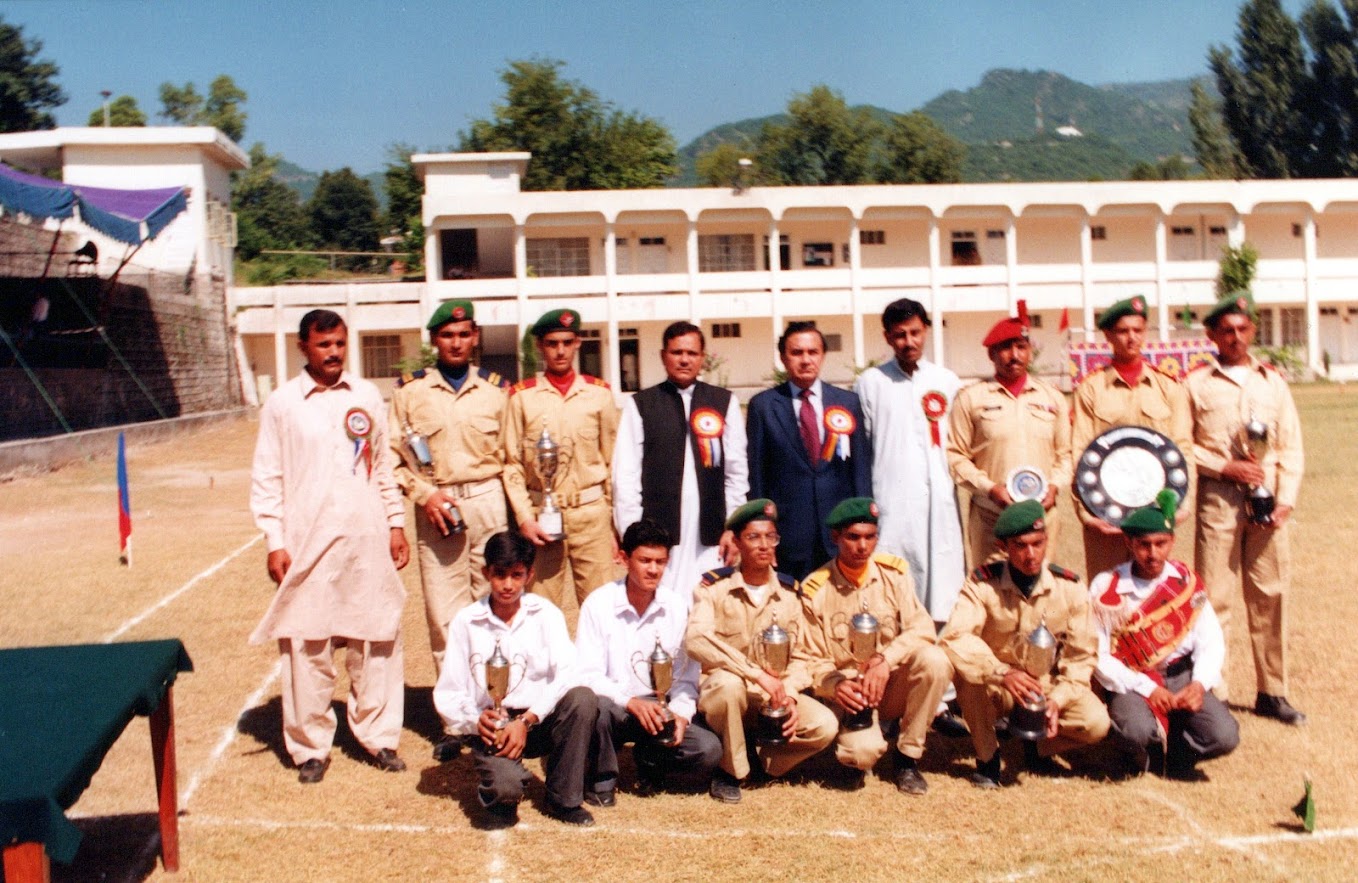
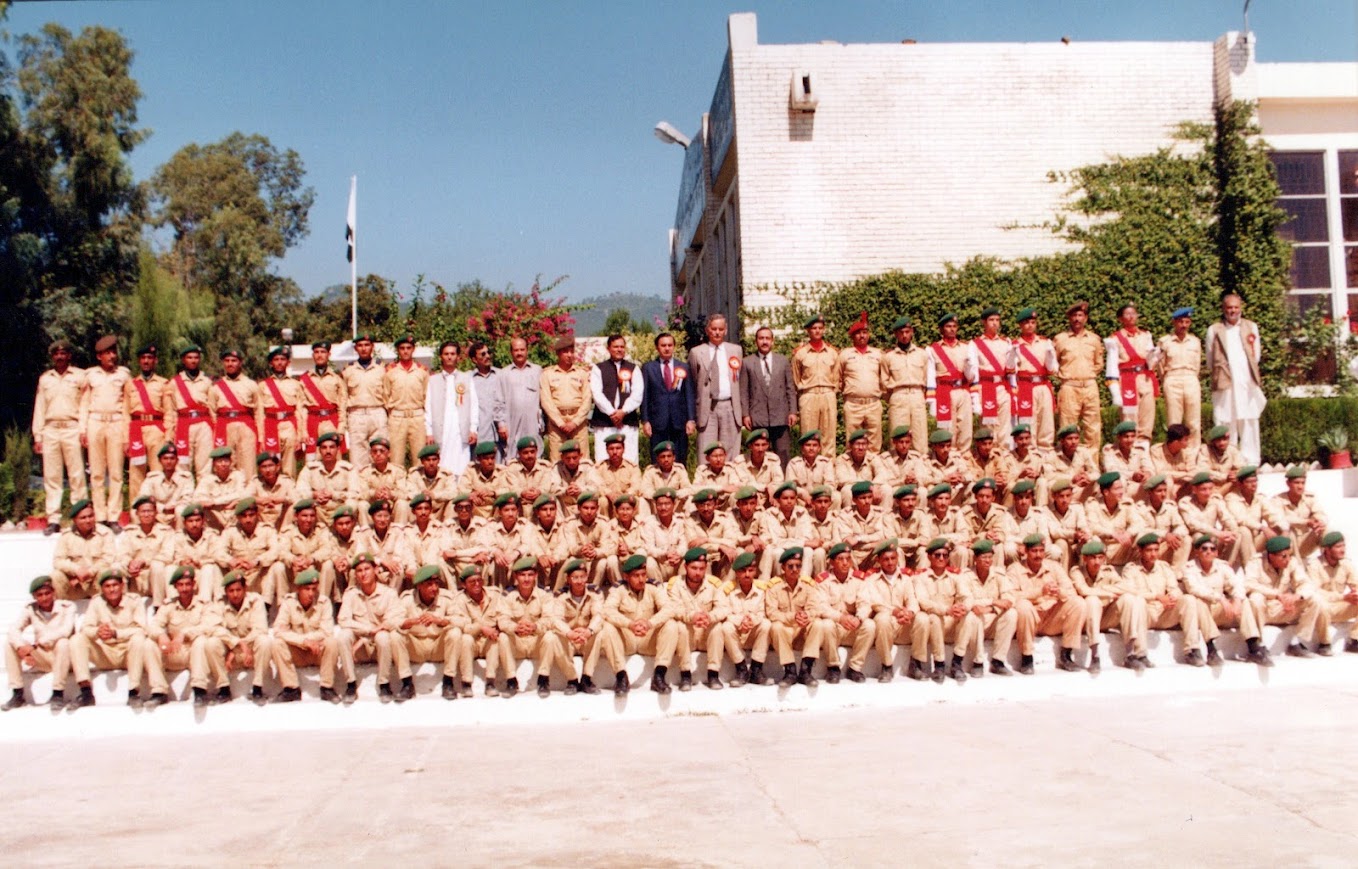
Back in the day, when we were in high school, we were required to take the National Cadet Corps (NCC) training for national defense. We received maybe 20 or 25 points toward our high school grade, which really helped me out since my board exam scores weren’t exactly great.

The H-8 College

The first training I attended was at H-8 College, near Peshawar Mor. I had to go there because I’d done my matriculation in Bahrain and moved back to Pakistan, missing the first year of training. I had to make it up during a month-long session at H-8.

It was a fun month; school was closed, so there wasn’t much activity other than our training, which was mostly comprised of people who had missed the first round for various reasons. I remember there were constant transportation strikes in Islamabad at the time. That meant no buses to take me from H-8 all the way home to F-10. I ended up walking that entire distance many days. Nowadays, that sounds like a terrible idea, but back then, it was just a long walk in hard military boots and khaki clothes that weren’t well-ventilated. It was difficult, but it left an everlasting memory.

I also remember someone introducing me to the H-8 cafeteria, saying, “This is where a student from a political party shot someone.” I think someone may have even died. It was one of those schools where political activity by student organizations was allowed, unlike our high school, which didn’t permit it.

Company Commander in F-7/3

The second training took place at my own school in F-7/3. This time, it was with my classmates—people I had grown accustomed to and become friends with, though not many of those bonds remained after moving to America.

I ended up becoming a Company Commander, which meant I was in charge of about 80 boys during the parade. I shouted commands like “Right turn,” “Left turn,” “About turn,” and “Forward march”—all in Urdu, of course. Those commands are still ingrained in my mind; I remember them by heart.

A Gone Era

The NCC doesn’t exist anymore, and the current generation will never truly understand what it was. Maybe it was a bonding experience, or perhaps just an interesting way to get a taste of the military lifestyle.

One highlight was going to a shooting range in Rawalpindi. The only thing I remember is that we used the World War II M1 Garand. We had to memorize its specs for the exam—specifically that it was an air-cooled rifle. Just a funny memory, I guess.


Memory and Anchors: My Life Between Two Worlds


I’ve decided to start documenting my life here in America. I’m not sure if anyone is actually interested, but what the heck—I’m going to start writing down the things I remember before I can’t remember them anymore. Turning 45 made me realize just how fast life is passing. With my father passing away, I see my own time coming now too; maybe soon, maybe later, but it’s inevitable. I’m not sure if my kids are as interested in my story as I was in my father’s, but I’ll write it anyway. If they ever want to know who I was, it’ll be here.

Coming to America was a dream of mine. In a way, I think I pushed everyone toward it. I basically forced my parents to come, even though it meant leaving me and my brother behind for a while. How life has figured itself out since then is up for interpretation. We live with the decisions we make; our future is just the sum of those choices over time. I live a happy life, I guess. The kids are grown, I’m in school, and time keeps moving on. I’ve always wanted to write about my likes, my dislikes, my favorites, and my rants. Even if nobody cares to know, I’m going to pen it down.

The First Return: 2002

The first time I went back to Pakistan after moving to the U.S. in ’98 was around 2002. Islamabad hadn’t changed much back then. I flew Emirates, and I remember having to save up every penny—the ticket cost me about $1,400. I took two weeks off and stopped in Dubai for a bit.

A friend of my father’s picked me up in Dubai to show me around. At that time, they were building their first major mall. I was blown away by the scale of it. Now, huge malls are the norm, but back then it felt surreal to see that many shops in one place. I’d seen malls in America and I’d lived in Bahrain before, so seeing the Gulf moving that fast felt different.

When I finally arrived in Islamabad, my parents and sister picked me up. On the drive home from the old airport, I instinctively reached for my seatbelt, and my parents started laughing. It wasn’t the norm there yet, but the U.S. had already made it a hard habit for me. That night, I got home after midnight, but by early morning, I was already out with the car to see friends. Life felt normal. I still had deep roots there; I knew people. I can’t say that’s the case anymore. Twenty-seven years later, the friends are gone. It’s just me and the family.

The City That Moved On: 2015

I visited again in 2003—a trip worth its own story—but after that, I didn’t go back for twelve years. When I finally returned in 2015 with my wife and kids, the Islamabad I encountered was a different city entirely. It wasn’t something I felt connected to.

Yes, the roads were there. The places were familiar. But the city itself had moved on without me. Maybe I deserved it for leaving, but I never felt “at home” after that. The city had expanded, grown massive. The only anchor I had left was my parents, and I fear the day that anchor is gone completely. With my father gone, I don’t know how much time I have left with the city I loved.

We used to call Islamabad the “city that goes to sleep early.” People from Karachi and Lahore always complained we were boring, but we liked it that way. By 2015, it was a sprawling metropolis. It used to be that if you ended up in I-10, you felt like you were in a strange, far-off land. Going to Pindi was a pain, and passing through Faizabad was a chore. Now, it’s all streamlined with motorways and major roads, but the beauty feels limited now.

Fading Footsteps

I remember being able to walk right in front of the Parliament House. My father worked at a bank branch right across from the Secretariat, but you can’t go there anymore—containers are always blocking the space. My old university in the Blue Area is gone; they moved. I used to walk through the Blue Area during the March 23rd parade practices, watching the full dress rehearsals and the planes flying overhead.

That city is gone. It’s more “organized” now, or maybe just more controlled. Every time I land there now, I feel out of place. I still consider myself an *Islamabadi*, but that identity might end with me. My kids have no real connection there. I wish they did, but to them, Pakistan is just a place for good food and clothes. There’s no identity in it for them.

It’s depressing to see everyone just looking to make a quick buck. I miss the days when I could walk from high school all the way to F-10 in the heat of summer, hitching lifts from passing cars. That time and the city just aren’t there anymore.
Back to the USA from Qatar

I am back in the States and there is a drama to all this. I was working for a sports retailer in Qatar and got my employment terminated by them in December. This wasn’t a shock but expected, the company had a history of doing such and being a professional it is part of a job. But things got interesting when they proceeded to put an exit block on me so I couldn’t leave Qatar. I complained but went along with this as I was on my 2 month notice period. Once the month ended, I didn’t get my salary. I asked for about my salary multiple times from the HR but couldn’t get a straight answer. Infact they wouldn’t pick up my calls or respond to emails. after a day or two I received an email that stated that my termination was cancelled and I was re-terminated by the company based on the claim that I caused finance loss to the company. I requested the proof of that and they refused to provide it.

During all this drama, I am packing my bags and hoping to leave but couldn’t. I couldnt find a job locally and the job market was not in good shape already.

The HR called me on day and told me to come and sign a paper, give up my rights and they will let me exit and put me on a plane to USA. I was desperate and decided to do it. The HR person even told me to come at 7am so it is done before the office even opens.

That night, I talked to a close friend of mine and he being a local told me not to give up on my rights. He convinced me that I should go to Human Rights Commission Office in Doha and explain the situation to them. It turns out that there is a human rights commission in Qatar which deals with the abuse of the employers, which mean sit is a frequent issue. Once i went there, i was directed to an exit permit section. I explained the situation to the front man (expat) who took my information to a Captain (Qatari) in the back. they contacted the company and was told to wait an hour.

After an hour, i was told that the company will settle with me within three days and provide the exit permit. I left and headed home. I called the Company and this time the HR Head picked up the phone. he informed that he will let me know what the company is going to do. the next day and over the weekend (Friday and Saturday) there was no information or feedback from the company. On Sunday (Sunday is a weekdays in Qatar) I wrote emails to the company HR and Legal department and there was no feedback. Around 4pm on Sunday I got an email informing me that there was nothing owed to me and they will issue the exit permit. I received the exit permit and subsequently left Qatar.

The day I left Qatar, I filed a case with Labor Ministry and hired a lawyer to represent me. So now we are awaiting a court date to get my rights.

Many things I noticed, there is clear abuse in Qatar for employers, doesn’t matter what nationality but private companies would try their best to abuse employees, some might fight back and some will give up and leave. this empowers the employers.

The company is tied to the World Cup and maybe they think their importance to the FIFA world cup will ensure that they don’t have an accountability. The final accountability is with Allah and i will wait for it.

some words about the life in Qatar. it is a dream land. a Façade where everything is like Disneyworld. It has a lot of goods but living there doesn’t prepare you for the real world which is very different. Specially coming from the west, there is a lot of tradeoff. Giving up on your rights, your freedoms, your values and your professionalism. The laws are in favor or Qataris, the rules are in favor of locals to ensure they win. There is a ceiling called Qatari that you cannot break through. you cannot argue or you cannot question. Qataris get alot of benefits while people who are actually building up their country, cleaning their beaches and making this world cup happen are at the bottom. clear racism, in offices, in government centers, in health clinics and many other places. I thought my American passport would help, it did to certain extent but I was always the south Asian with an American passport and not an American. Admissions to universities are with dual standards. The country is a bling bling land but PR the machine will make you believe that they are the most just and peaceful.

27 Years Later- The Ghost of December 4th

It was December 4, 1998—a Friday. I remember it felt crisp, cold, and entirely new.

I arrived at Washington Dulles International Airport ready to start a new life, stepping off the plane in my Caterpillar boots and a leather jacket. I landed in America with a heart full of hope, wishing for something better, even if I wasn’t entirely sure what that future actually looked like. All I knew for certain, deep in the back of my mind, was that I had left Pakistan behind for good.

Looking back now, 27 years later, I sometimes wonder what it was all about. The “net result” of moving here has been a mix of good and bad. Naturally, I try to concentrate on the good, but the difficult parts I didn’t see coming have left their mark too.

I still remember that morning vividly. After clearing immigration and getting the Green Card papers sorted, I walked out into an empty airport. I had flown in on Saudi Arabian Airlines; we had stopped in New York for a bit before the final leg to D.C.

Walking through the parking lot, everything caught my eye. I remember seeing a Mitsubishi Eclipse and thinking, *“Wow, what a car.”* A friend of my father’s picked us up and took us to Bladensburg. I didn’t waste any time. Just two days later, I found a job in Washington D.C. working at a Subway sandwich shop on Benning Road. It didn’t take long to realize that Benning Road was notorious—a rough area that taught me some hard lessons quickly.

That was my “Welcome to America.”

Two Nation Theory

Two Nation Theory and the never ending learning of the concept in our Pakistan Studies class was always torturous but now looking back at it. It seems that Quaid-e-Azam was right. Muhammad Ali Jinnah was correct and had good sight of the issues that Muslims will face in a united India. Now India under the BJP government is proving it daily. Attacks on Muslims have increased many folds. They are being stopped from practicing their religion in public. Even public display of prayer is considered unacceptable. sometimes it is hijab

Everyday there is news about the oppression of the majority on the minority and it is not just Muslims, but Christians and Buddhists.

The international media is also starting to take notice on the issues Muslims face in India. Indian government can ignore or deny all this but the reality is much different. What happened in Gujrat and the ramifications of the genocide that occurred and the resulting ban of Modi into USA was due to the same policies that were enacted in Gujrat India under Modi and now being implemented in Inida at a national Level.

The Final Solution

Whatever the future holds for muslims in inidia, it is not going to be good for them. Kashmir and now the fire spreads to rest of the country. Modi who is considered a war criminal in on his way to be the next Hitler at best, Facist at minimum. Friend of the apartheid.

This is a good link to understand what Two Nation Theory is all about.

Some other Links

https://www.britannica.com/place/Pakistan/The-Muslim-League-and-Mohammed-Ali-Jinnah

https://www.bbc.com/news/world-asia-40961603

Rush of Memories

Recently, my mind has been on a roller coaster ride of memories. The 90s are hitting me hard and not sure why is that the case. from my time of street cricket in Islamabad to the first snow in the USA to the welcoming of the new Millenium on the streets of DC.

there is sometimes too much flowing through the brain and the ability to capture and write is not possible.

Life has been a journey.

I am a nomad than a resident. Maybe a world citizen. looking past at my life, USA was the longest stint of time spent anywhere which was 14 years. otherwise, life has been divided into Pakistan, Bahrain, Pakistan, USA and Qatar. Every timeframe offering a different perspective, different challenges.

there is one memory that has been sticking out for me for a while. i think it is my earliest memory.

it is from a place called satellite town. we lived here until I was few years old and moved to Islamabad. what I remember is that it is a holiday or the weekend. We are somewhere in spring. I remember there is a veranda in the back of the house. I can feel the cold of winter going away and the heat of the sun making it very comfortable. Everyone in the house is asleep. I am awake, I am sitting on the veranda playing with a red rail engine toy.

There is nothing more to the memory than this but when I think about it. I can still feel the warmth of the sun, the feeling of light cold in the air, the coldness of the veranda ground, and the beautiful spring morning.

“Nothing is ever really lost to us as long as we remember it.”
― L.M. Montgomery, The Story Girl